
What does a School Board do?
The things you’d expect
When people think about the role a school board, they often list the common responsibilities assigned to any board:
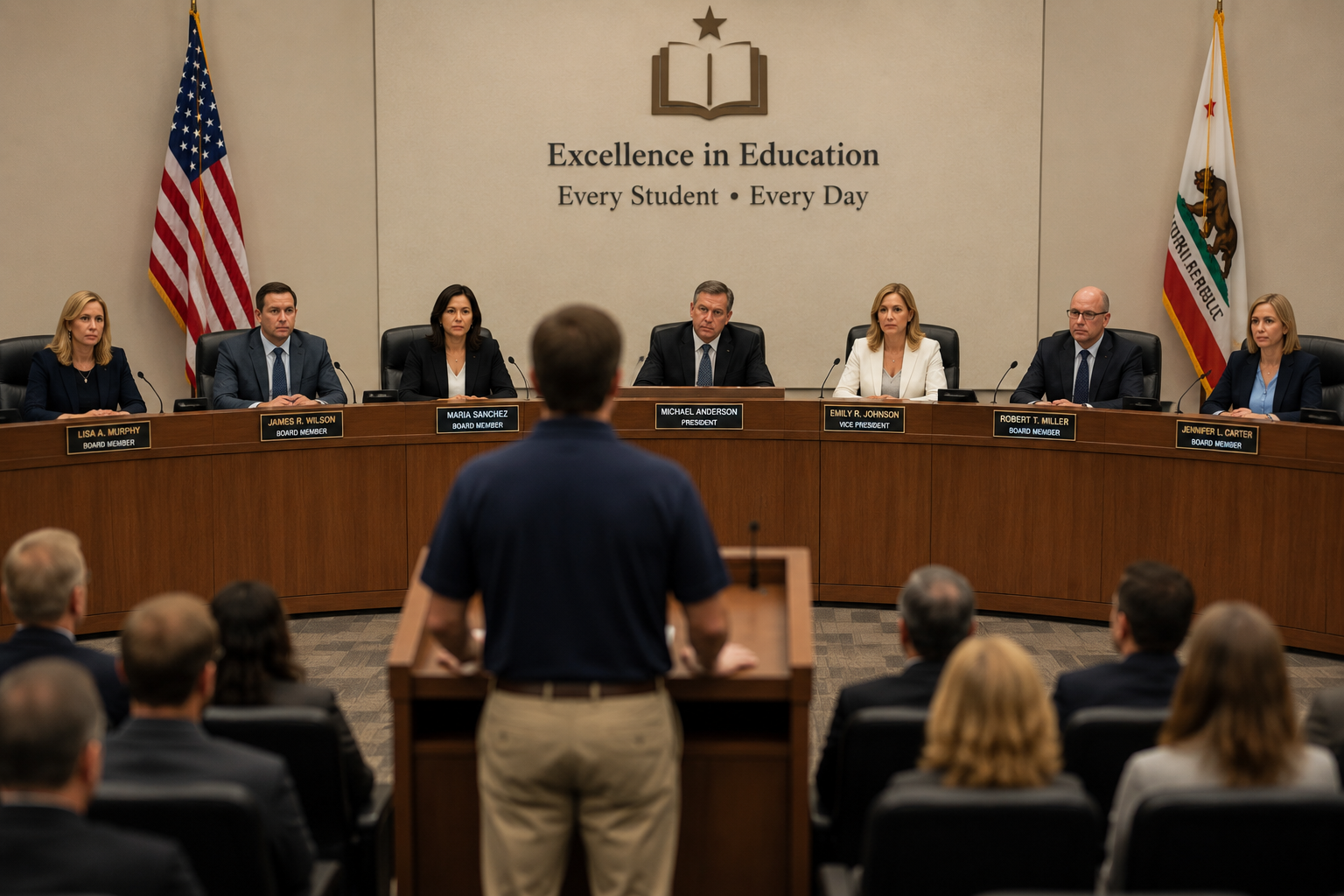
Represent the will of the community regarding overall school operations
Select, hire, and evaluate the district Superintendent
Manage the district budget
Approve school curriculum
Negotiate the contracts with the teachers and staff unions
Set district goals and create/update district policies and regulations
If the district was a company
People often use the metaphor of a private company to describe how a school district works:
The School Board is like the Board of Directors—Elected by the community stakeholders to run the district according to their desired outcomes.
The Superintendent is like the CEO—given the authority to hire staff and execute the policies determined by the board.
The teachers and staff are the employees—an integral part of the organization without whom the district could not function.
The parents are the customers—they transmit the “demand signal” to the board, Superintendent, and teachers to let them know what they want from their schools
The students are the “product”—the ultimate goal of the district is to graduate students who are prepared to enter the next stage in life, whether that be a university, community college, technical school, a career, or something else.
What makes a school board different?
The school district / private company metaphor breaks down when it comes to revenue. Unlike a private company, the school district is entirely dependent on the State for its revenue. The two components of that revenue are 1) the per-student funding and 2) the average daily attendance (ADA). Most people focus on increasing ADA—the more students we enroll and the more we reduce chronic absenteeism, the more funding the district gets. But the other component—the per-student funding—is often overlooked. That number is determined via the Local Control Funding Formula (LCFF) and changes every year as determined by the Governor’s annual budget.
The School Board’s unspoken role
Beyond its internal responsibilities, one of the school board's most important roles is to represent our district's interests at the State level. The board has a meaningful voice in securing the resources our schools need and in supporting policies that reflect our community's priorities. Fulfilling that role requires board members who are willing to speak up firmly and respectfully on behalf of our students, parents, teachers, and staff — even when it means taking an unpopular position in Sacramento. That is part of being a steady, effective advocate for our Palos Verdes schools.